



Humanity Stands at a Turning Point
The year 2026 has witnessed another season of devastating wildfires, catastrophic flash floods, powerful earthquakes, and increasing volcanic activity. Across the globe, communities are struggling with disasters that are becoming more frequent and more destructive. Yet, while Nature sends increasingly urgent warnings, much of the world’s attention remains fixed on wars, economic competition, political rivalries, and the pursuit of material prosperity.
The conflict in the Middle East is frequently portrayed as a religious struggle. However, beneath the religious language lies a deeper contest for oil, energy resources, strategic influence, and geopolitical power. Humanity continues to invest enormous resources in conflict while neglecting the health of the planet that sustains all life.
For decades, scientists have warned that rising greenhouse gas emissions, deforestation, pollution, and unsustainable industrial growth are altering Earth’s climate. Global temperatures continue to rise, glaciers are melting, oceans are warming, extreme weather events are increasing, and vital ocean circulation systems are showing signs of weakening. These are no longer distant predictions—they are observable realities.
The question before us is no longer whether the Earth is changing. The real question is why these changes are accelerating and what deeper principle connects them.
Earth: A Self-Organizing Living System
Nature reveals remarkable intelligence.
The Earth is not merely a collection of rocks, oceans, and atmosphere. It behaves as an integrated, self-regulating system in which countless natural processes work together to sustain life. Scientists have described this concept through the Gaia hypothesis, while many ancient spiritual traditions have long viewed the Earth as a living creation governed by divine order.
Every day, one half of the Earth receives sunlight while the other rests in darkness. This continuous alternation between light and darkness maintains a delicate balance of energy. Plants, forests, algae, and phytoplankton capture solar energy and convert it into living matter through photosynthesis. They produce oxygen, absorb carbon dioxide, regulate temperature, and sustain every food chain on Earth.
Life itself participates in maintaining the balance of the planet.
Humanity Has Disturbed Nature’s Balance
The Industrial Revolution marked one of the greatest turning points in human history. It brought extraordinary technological progress, but it also dramatically increased humanity’s impact on Earth’s natural systems.
Over the past two centuries we have:
- Released unprecedented quantities of waste heat into the environment through industry, transportation, and energy production.
- Cleared vast forests that once regulated climate and protected biodiversity.
- Polluted rivers, lakes, and oceans while damaging marine ecosystems.
- Expanded industrial and digital activity around the clock, increasingly disrupting Earth’s natural cycles.
Each of these actions may appear independent, but together they place growing stress upon the interconnected systems that sustain life.
A Perspective on Earth’s Energy Balance
Through my own study of Nature, I have developed a broader interpretation of these changes.
I view the Earth as operating through two complementary principles: energy and matter. Energy drives movement, transformation, and renewal, while matter provides structure and stability. Healthy ecosystems depend upon maintaining harmony between these two aspects.
When human civilisation continually injects additional heat into the environment while simultaneously weakening nature’s capacity to regulate that heat through forests, oceans, and living systems, the balance gradually shifts.
In this view, increasing environmental instability is not the result of isolated events but the consequence of an accumulating imbalance within Earth’s integrated system.
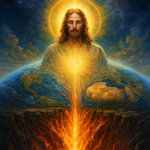
I further visualise the Earth as possessing a vertical energy axis associated with planetary dynamics and a horizontal equatorial axis representing its material organisation. While this model remains a conceptual interpretation rather than an established scientific theory, it offers a framework for understanding why multiple environmental systems may be becoming unstable simultaneously.
Warning Signs Around Us
Many developments deserve careful attention:
- Global temperatures continue to reach record highs.
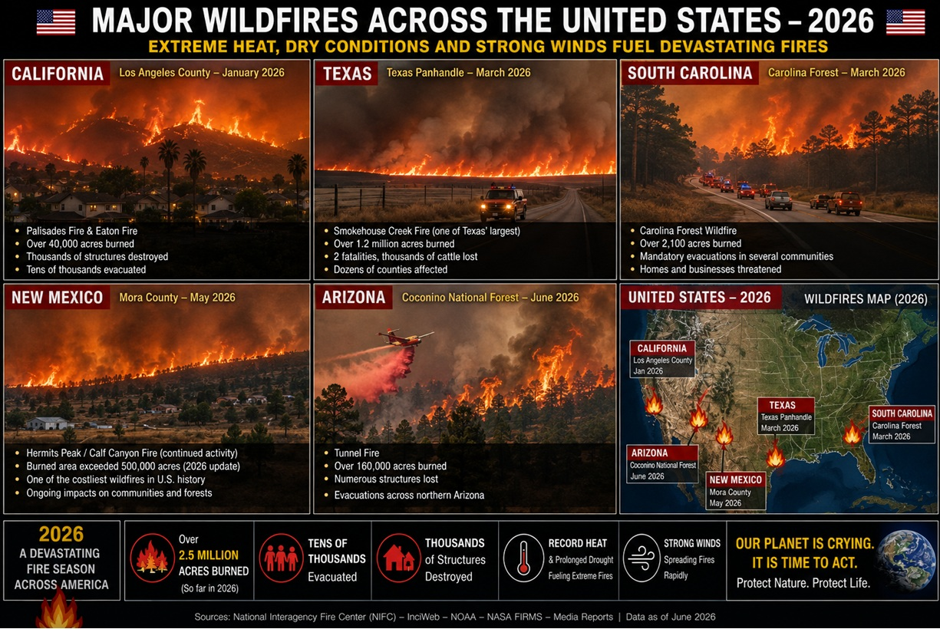
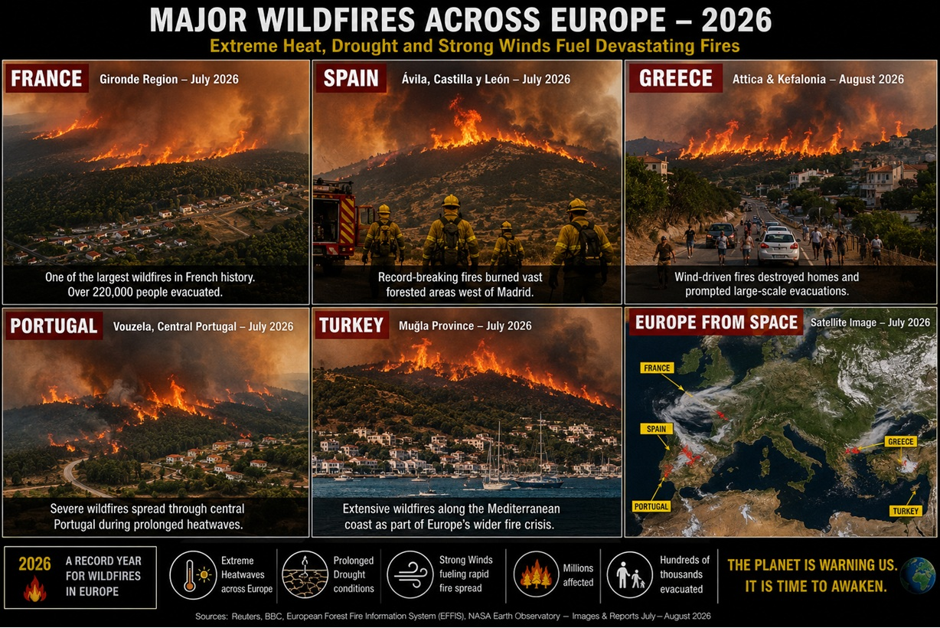
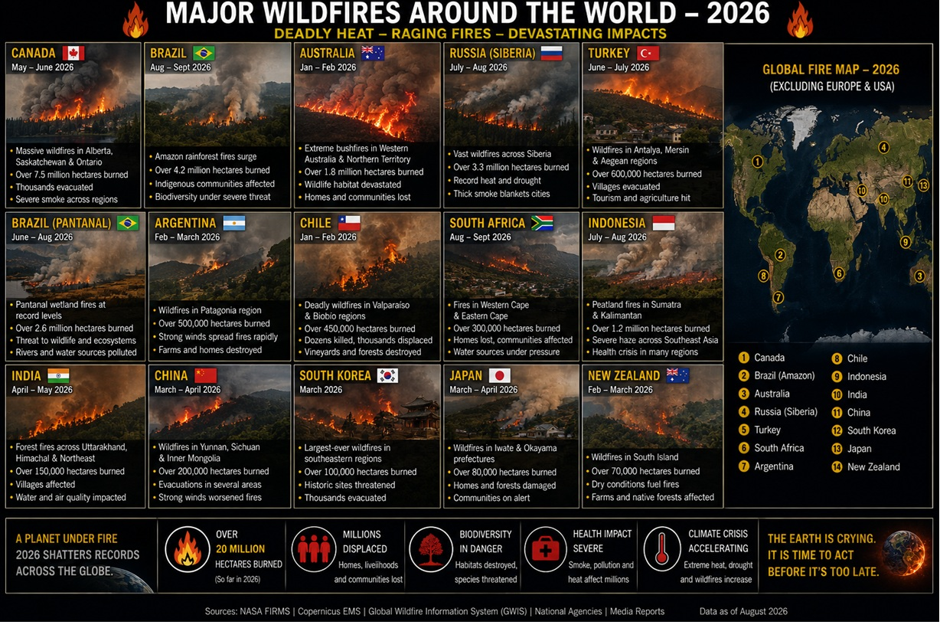
- Wildfires have become larger and more intense.
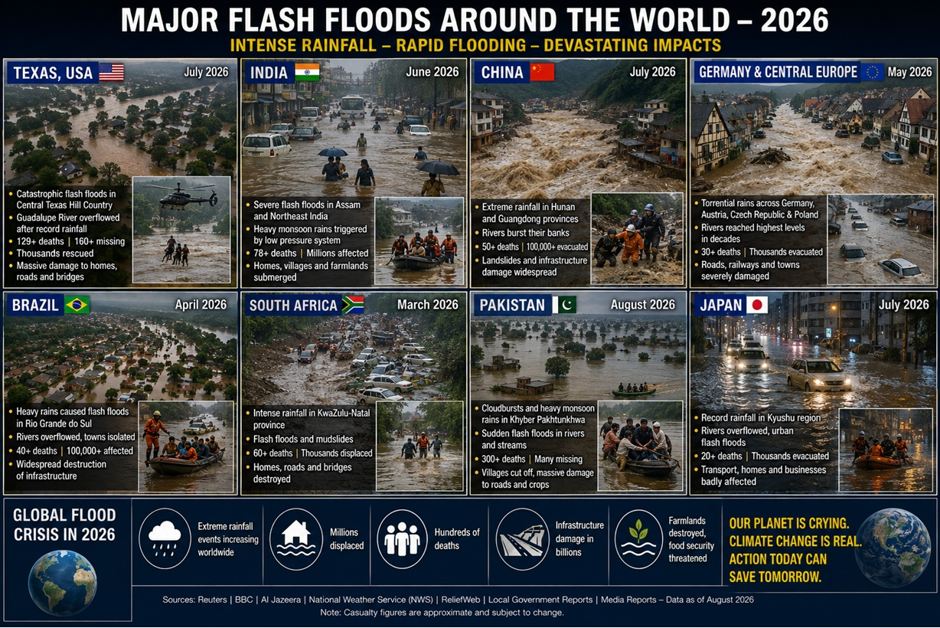
- Flash floods occur with increasing frequency.
- Droughts and heat waves are affecting millions of people.
- Scientists have reported concern about the slowing of the Atlantic Meridional Overturning Circulation (AMOC), including the Gulf Stream, which plays a crucial role in distributing heat around the globe.
- Earth’s natural electromagnetic activity, including Schumann Resonance, continues to be studied for possible relationships with atmospheric and geophysical processes.
No single observation explains every event. Nevertheless, taken together, they suggest that Earth’s natural balancing mechanisms are under increasing pressure.
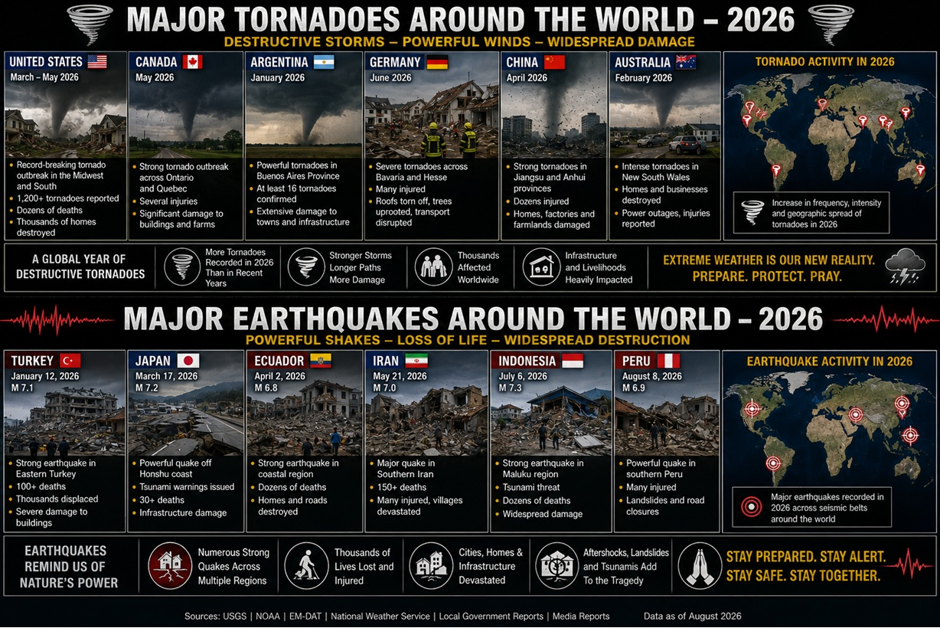
These pictures speak to the gravity of the situation.
Note – These pictures are until the end of 2026
Beyond Technology
Humanity often responds to every crisis by seeking a technological solution. Technology undoubtedly has an important role to play. However, technology alone cannot solve problems created by an imbalance between human civilisation and Nature.
Lasting solutions require restoring forests, protecting oceans, reducing unnecessary energy waste, developing cleaner technologies, conserving biodiversity, and living within the limits established by Nature.
More importantly, they require a transformation in human consciousness—from exploitation to stewardship, from endless consumption to responsible care, and from competition to cooperation.
A Call to the Next Generation
Every generation inherits a responsibility. Generation Z and Generation Alpha will inherit a planet facing unprecedented environmental challenges, but they also possess unprecedented scientific knowledge, technological capability, and global connectivity.
The future will depend not merely upon innovation but upon wisdom.
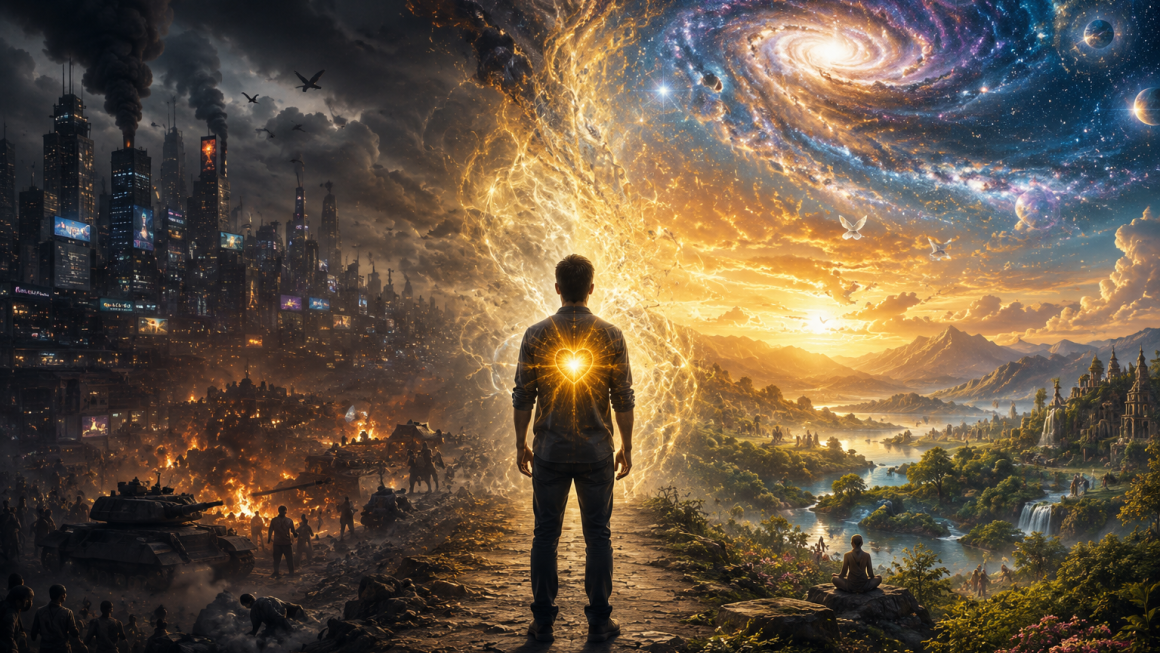
Human civilisation has reached a decisive moment. We may continue pursuing unlimited material growth while ignoring Nature’s warnings, or we may choose a different path—one that restores harmony between science, technology, humanity, and the living Earth.
There is still hope.
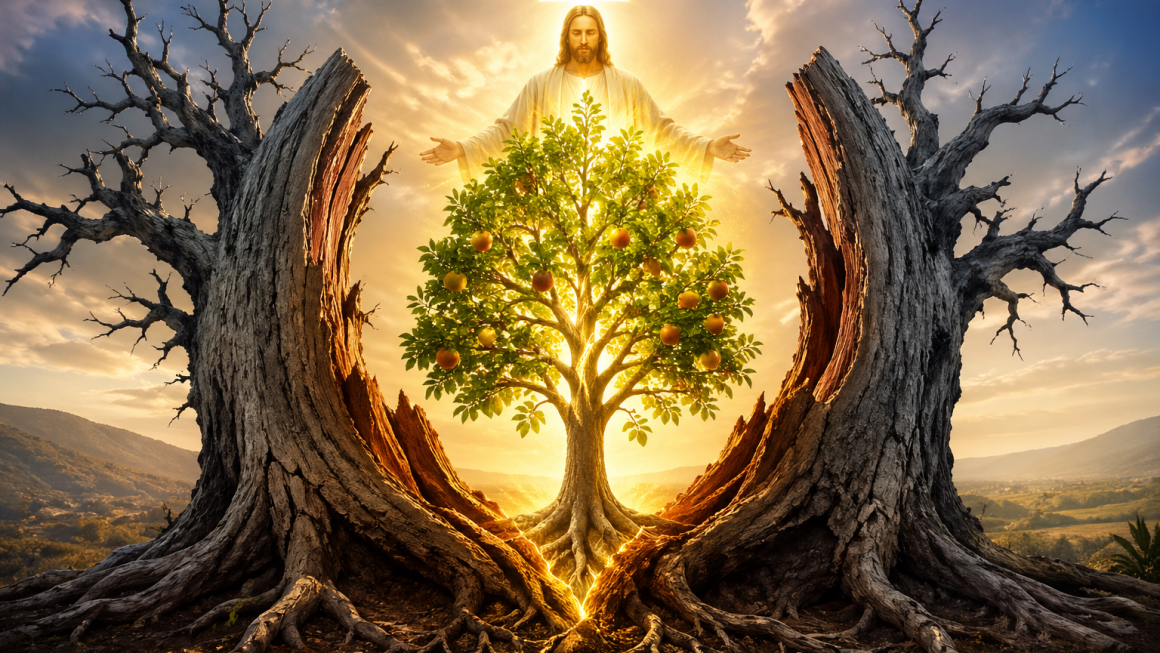
Nature continues to sustain us despite the immense pressures placed upon her. If humanity acts with humility, wisdom, and responsibility, this period of crisis may become the beginning of a new era—an age in which scientific understanding and spiritual insight work together to preserve life for future generations.
The choice before us is simple: continue the path of imbalance, or awaken to the principles that sustain life itself.