


In the previous chapter/article, “The Great Purpose of Jesus’s Manifestation and Death – Awakening Humanity to its Consciousness and Intelligence”, I had raised six important questions to Christianity as a religion. Here I share my thought.
1] Why did Jesus meekly accept death in spite of the immense power that God bestowed upon Him, which He amply demonstrated to the people?
Answer:
In the framework of my understanding, Satan represents a powerful fallen spiritual authority, possessing great power but standing in rebellion against God. The dominion of God’s earthly Kingdom, however, was given to human beings—the Children of God—as stated in Genesis: “Let them have dominion” (Genesis 1:26–28).
Satan deceived humanity and sought to take control of what God had entrusted to His children. The conflict, therefore, was not merely between two individuals; it involved the dominion, freedom, and destiny of humanity and Earth.
Jesus, although possessing divine power, chose not to overcome Satan through the exercise of worldly or physical power. Instead, He entered fully into the human condition and willingly accepted suffering and death.
As Scripture says:
“Though he was in the form of God, he did not count equality with God a thing to be grasped, but emptied himself, by taking the form of a servant, being born in the likeness of men. And being found in human form, he humbled himself by becoming obedient to the point of death—even death on a cross.”
— Philippians 2:6–8
Jesus Himself declared:
“No one takes it from me, but I lay it down of my own accord.”
— John 10:18
Thus, Calvary was not a defeat caused by weakness. It was a voluntary surrender of Life in obedience to God and in love for humanity.
Jesus conquered through surrender rather than domination, through Love rather than violence, and through Life rather than death.
2] What do we mean by Resurrection? What was its necessity?
Answer:
In my understanding, Resurrection is much more than the return of a dead physical body to life. It represents the victory of Christ over death and over the spiritual powers of darkness and the opening of the way from death to Life.
The Kingdom of God, as I understand it, has many spiritual dimensions or realms. Satan had entered into and exercised influence over the fallen realms of Creation. Therefore, Christ had to descend into the very depths of the condition into which humanity had fallen. He went to the deepest point of darkness and death and, from within, broke its power inside out.
The Cross was therefore not the end of the work. Calvary was the descent; Resurrection was the emergence in victory.
Jesus entered death willingly, but death could not hold Him.
As Peter proclaimed:
“God raised him up, loosing the pangs of death, because it was not possible for him to be held by it.”
— Acts 2:24
This is the mystery of Resurrection: the One who entered the deepest realm of death emerged from it in Life.
The Resurrection therefore demonstrates that the power of darkness and death is not ultimate. Christ entered the domain of death but was not conquered by it. He broke its hold from within.
Paul expresses this victory powerfully:
“Death is swallowed up in victory.”
— 1 Corinthians 15:54
And again:
“O death, where is your victory? O death, where is your sting?”
— 1 Corinthians 15:55
In this sense, Resurrection becomes the revelation that Life is greater than death, Light is greater than darkness, and the Spirit of God is greater than the forces that seek to imprison Creation.
The necessity of Resurrection was therefore not merely to prove that Jesus had returned to physical life. It was necessary to reveal that the sacrifice at Calvary had accomplished its purpose.
If Jesus had remained in the grave, humanity could have interpreted the Cross as the final triumph of death. But Resurrection revealed the opposite: death itself had been entered, confronted, and overcome.
Jesus had already declared:
“I am the resurrection and the life. Whoever believes in me, though he die, yet shall he live.”
— John 11:25
His Resurrection became the living demonstration of this declaration.
The New Testament also presents Christ’s descent and exaltation as part of one great movement:
“He who descended is the one who also ascended far above all the heavens, that he might fill all things.”
— Ephesians 4:10
And Paul speaks of Christ as the One who:
“disarmed the rulers and authorities and put them to open shame, by triumphing over them.”
— Colossians 2:15
Thus, in the framework of my understanding, Christ had to go to the depth before He could emerge into the fullness of victory.
The movement can be understood as:
Light → Descent → Darkness → Death → Victory → Resurrection → New Life
Christ went into the deepest condition of human captivity and emerged from it transformed into the living testimony of God’s victory.
His Resurrection therefore marks a transition in Creation—from the old order dominated by death towards a New Creation.
Paul writes:
“Therefore, if anyone is in Christ, he is a new creation. The old has passed away; behold, the new has come.”
— 2 Corinthians 5:17
For me, this is the deeper significance of Resurrection. It is not simply that Jesus came back from death. It is that He opened a way through death.
He went into the depth and came out through the other side.
He entered darkness and emerged as Light.
He entered death and emerged as Life.
He entered the realm of captivity and emerged in freedom.
Therefore, Resurrection is the spiritual victory of Christ and the beginning of the restoration of humanity and Creation.
It is the assurance that the forces of darkness cannot hold Creation forever, because the Life of God is greater than death.
As Revelation declares:
“I am the First and the Last, and the Living One. I died, and behold I am alive forevermore, and I have the keys of Death and Hades.”
— Revelation 1:17–18
In this sense, the Resurrection is the seal of victory placed upon Calvary—the confirmation that the work of Christ did not end in death, but opened the pathway towards Life, Light, Restoration, and a New Creation.
The whole process can perhaps be understood as a biological science of birthing a new being from the womb. The Spirit of the Father—Consciousness, Intelligence, and the Original Information—penetrates the womb, initiates conception, and then unfolds from within, guiding the formation of a new body through which that original information can be perpetuated.
In this sense, the womb becomes not merely a place where a body is formed, but a living chamber in which consciousness, intelligence, and information unfold into a new expression of life.
We will explore this fascinating dimension further, including its possible connections with developments in modern physics and our understanding of information, energy, and the emergence of life, in a later section.
3] Why did Jesus have to come back in the form of the Spirit of God?
Answer:
Defeating Satan alone did not complete the purpose of Christ’s mission. The victory over the forces of darkness had to be followed by the liberation, transformation, and empowerment of the Children of God.
Jesus had not come merely to defeat an enemy and then leave humanity behind. He came to restore humanity to its relationship with God and to empower His children to take responsibility for the Kingdom that had been entrusted to them.
The dominion of Creation had originally been given to humanity:
“Let us make mankind in our image, in our likeness, so that they may rule…”
— Genesis 1:26
Therefore, after His Resurrection, Christ’s work had to continue within humanity itself.
This is why, in my understanding, Jesus returned not simply as a physical person but in the form of the Spirit of God—the Spirit of Christ, the Holy Spirit.
Before His death, Jesus Himself prepared His disciples for this mystery. He told them that His physical departure would make way for the coming of the Helper:
“It is for your good that I am going away. Unless I go away, the Advocate [Helper] will not come to you; but if I go, I will send him to you.”
— John 16:7
This is a profound transition.
While Jesus walked physically upon Earth, His presence was experienced by those who could see, hear, and touch Him. But through the Spirit, His presence could enter within every willing human heart.
The physical Jesus could walk with His disciples.
The Spirit of Christ could walk within them.
The physical Jesus could teach them the Truth.
The Spirit could lead them into Truth.
Jesus therefore said:
“I have much more to say to you, more than you can now bear. But when he, the Spirit of truth, comes, he will guide you into all the truth.”
— John 16:12–13
The purpose was therefore not simply to preserve the memory of Jesus. It was to continue His work through the transformed consciousness of His followers.
Jesus had said:
“I will not leave you as orphans; I will come to you.”
— John 14:18
And immediately after this, He spoke of an extraordinary indwelling:
“On that day you will know that I am in my Father, and you are in me, and I am in you.”
— John 14:20
This points towards a profound transformation—from following Christ externally to living in Christ and allowing Christ to live within.
The Spirit therefore becomes the bridge between the victory of Calvary and the restoration of humanity.
Christ defeated the power of darkness.
The Spirit empowers the Children of God to stand in that victory.
Christ opened the door.
The Spirit leads humanity through it.
Christ revealed the Kingdom.
The Spirit enables humanity to manifest the Kingdom.
This is why the coming of the Spirit at Pentecost is so significant. The disciples who had previously been fearful suddenly became bold witnesses. The Book of Acts describes this transformation:
“You will receive power when the Holy Spirit comes on you; and you will be my witnesses…”
— Acts 1:8
The Spirit was therefore not given merely for personal comfort or religious experience. It was given for power, transformation, witness, service, and the continuation of Christ’s work.
Jesus had told His disciples:
“As the Father has sent me, I am sending you.”
— John 20:21
The mission therefore moves from Christ to His disciples, and from His disciples to humanity.
The Kingdom cannot be restored merely by changing institutions, constructing churches, or creating religious systems. It requires the transformation of the human being from within.
Paul describes this transformation:
“Do you not know that you yourselves are God’s temple and that God’s Spirit dwells in your midst?”
— 1 Corinthians 3:16
This is an extraordinary idea. The dwelling place of God is not ultimately confined to a building of stone. The human being becomes a living temple of the Spirit.
The Spirit therefore enables the Children of God to awaken to their responsibility.
They are called to become guardians rather than merely subjects of the Kingdom—to protect Creation, uphold Truth and Justice, serve one another, and resist the forces that destroy Life.
This connects directly with the original responsibility given to humanity in Genesis:
“The LORD God took the man and put him in the Garden of Eden to work it and take care of it.”
— Genesis 2:15
The responsibility to “work” and “take care” is therefore not merely a material responsibility. It can also be understood as a spiritual calling—to take guard of Creation and preserve the Life entrusted to humanity.
The coming of the Spirit marks the beginning of this new phase.
The physical Jesus had completed His earthly sacrifice.
The risen Christ had demonstrated victory over death.
The Spirit of Christ then returned to humanity to continue the work from within.
This is why Jesus said:
“I will ask the Father, and he will give you another Advocate to help you and be with you forever—the Spirit of truth.”
— John 14:16–17
And Paul gives perhaps the simplest expression of this mystery:
“Christ in you, the hope of glory.”
— Colossians 1:27
Thus, in my understanding, the story does not end at Calvary or even at the Resurrection.
It moves through three great stages:
Calvary — the defeat of the power of darkness.
Resurrection — the victory of Life over death.
The Spirit — the return of Christ within humanity to transform and empower the Children of God.
The first stage breaks the chains.
The second demonstrates that the chains cannot hold Life.
The third gives humanity the power to walk free.
This work has been continuing since the coming of the Spirit of Christ. Every soul that awakens to the Spirit, turns towards Truth, chooses Life over destruction, and works for Justice and the preservation of Creation becomes part of this continuing work of restoration.
Jesus therefore did not leave humanity alone after His Resurrection.
He promised:
“And surely I am with you always, to the very end of the age.”
— Matthew 28:20
The Spirit of Christ is therefore, in my understanding, the continuing presence of God within humanity—calling, guiding, transforming, and empowering the Children of God to take responsibility for the Kingdom and participate in the restoration of Earth and Humanity.
Jesus’ resurrection, His departure from the world on the 40th day, and the return of the Spirit on the 50th day all have a deeper purpose. We can draw a parallel with human embryogenesis and perhaps gain a new way of understanding this mystery.
In human embryogenesis, the first moment of cellular division establishes the fundamental boundary and organisation within which the child will develop—the embryo itself and the supporting system that sustains its growth. Following this initial division, the developing organism becomes increasingly centralised and organised as the new life unfolds from within the womb.
In a similar way, the Spirit becomes centralised around the emerging Child, bringing together the processes through which a new being is formed within the womb.
Seen from this deeper perspective, Calvary can be understood as a profound process of dissolution, recreation, and restoration—not merely as an ending, but as a transition through which an old order dissolves and a new order emerges.
This parallel between embryogenesis and spiritual transformation may provide an intriguing framework for understanding the deeper meaning of Christ’s death, resurrection, departure, and the coming of the Spirit.
4] What is the promised Second Coming? Why is it being delayed?
Answer:
In my understanding, the promised Second Coming of Christ is not merely the physical appearance of Jesus in the sky at some future moment. It also points towards the awakening of humanity to the Truth that the God we seek already exists within and between us as the Life Force, Consciousness, and Intelligence sustaining Creation.
Jesus came into the world to reveal the Father. He then returned as the Spirit of God so that the Divine Presence could work within humanity. The next stage, therefore, is the awakening of humanity to what has already been given.
Jesus said:
“The kingdom of God is within you.”
— Luke 17:21
This statement changes the direction of our search. If the Kingdom of God is within us, then humanity does not need to search endlessly for God only in external temples, churches, rituals, institutions, or religious structures. The outer forms may point towards God, but the ultimate encounter with God must take place within the living human being.
Paul expresses this even more directly:
“Do you not know that you yourselves are God’s temple and that God’s Spirit dwells in you?”
— 1 Corinthians 3:16
And again:
“Christ in you, the hope of glory.”
— Colossians 1:27
Thus, in this understanding, the Second Coming is connected with the awakening of the human consciousness to the indwelling Christ.
The God we seek is not merely a distant God above us. He is the Life that sustains us, the Consciousness in which we exist, and the Intelligence operating through Creation.
As Paul declared:
“For in him we live and move and have our being.”
— Acts 17:28
The same Truth is expressed in another way in the Gospel:
“The Father who dwells in me does his works.”
— John 14:10
Therefore, the Second Coming can be understood as a movement from external religion to inner realisation, from merely believing in God to experiencing the presence of God, and from worshipping the Kingdom from outside to manifesting the Kingdom from within.
Why, then, is it being delayed?
Perhaps the better question is not whether Christ is delaying His coming, but whether humanity is ready to recognise His coming.
The light can be present, yet the eyes may remain closed.
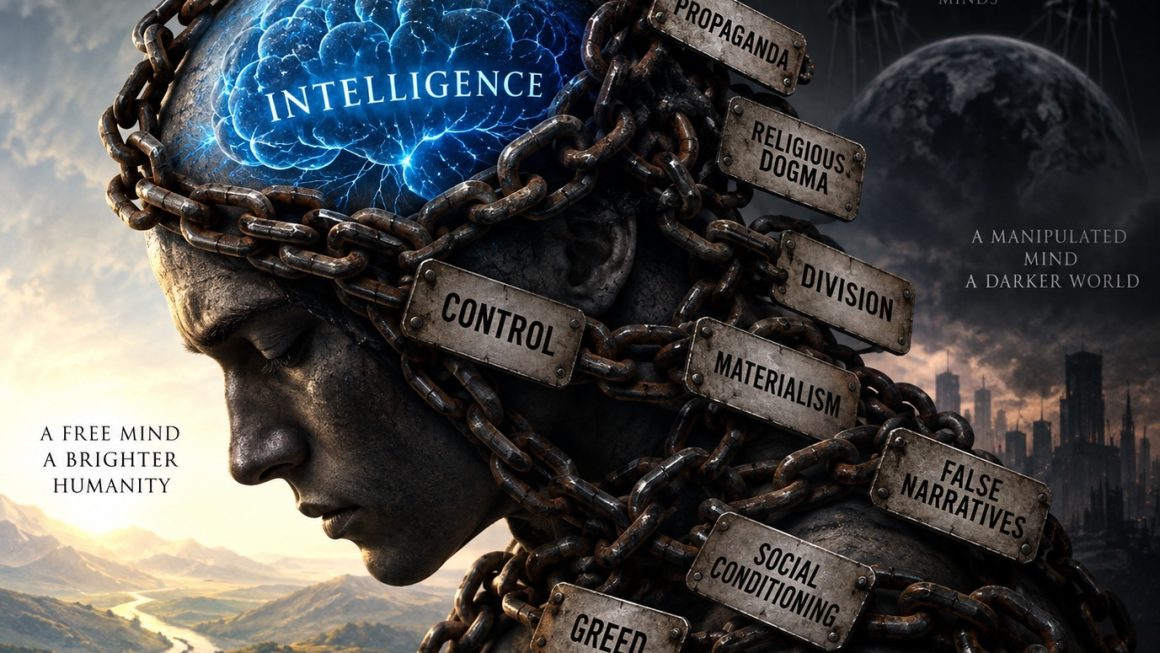
Truth can be revealed, yet the mind may remain imprisoned by old beliefs.
The Spirit can be within us, yet we may continue searching for God exclusively outside ourselves.
Jesus warned that the coming of the Kingdom would not necessarily be recognised through outward signs alone:
“The kingdom of God does not come with observation… for indeed, the kingdom of God is within you.”
— Luke 17:20–21
The delay, therefore, may be understood as a delay in human awakening.
Humanity remains deeply attached to material power, wealth, religious identity, political authority, division, and the external structures through which it seeks security. These attachments create veils between the individual and the deeper consciousness within.
The human mind continues to look outward when it is being called to look inward.
The ancient wisdom of the Upanishads expresses this beautifully:
“The Self-existent pierced the senses outward; therefore one looks outward, not within oneself. But a wise one, desiring immortality, turned his eyes inward and beheld the inner Self.”
— Katha Upanishad 2.1.1
This may be one of the great challenges of our age.
Humanity has acquired extraordinary external knowledge, technology, wealth, and power, yet has not developed an equal understanding of the inner consciousness and intelligence that gives direction to that power.
Science has enabled humanity to reach into the atom and explore the vastness of space. Technology has connected billions of people. Artificial intelligence is beginning to extend human intellectual capability. Yet the fundamental question remains:
Who is the consciousness using all this knowledge, and for what purpose?
The Second Coming, in my understanding, therefore involves a transformation of consciousness—a movement from knowledge to wisdom, from information to understanding, from material power to Life, and from separation to Oneness.
Jesus spoke of this awakening when He said:
“When the Spirit of truth comes, he will guide you into all the truth.”
— John 16:13
The Spirit is therefore not merely a comforter. The Spirit is a guide into Truth.
And the promised presence of Christ is not necessarily confined to an external event. Jesus said:
“I will not leave you as orphans; I will come to you.”
— John 14:18
He also said:
“I am with you always, to the end of the age.”
— Matthew 28:20
Thus, the question of the Second Coming may ultimately become a question of recognition.
Will humanity recognise Christ when the Spirit speaks from within?
Will we recognise the Life Force that sustains us as the presence of God?
Will we recognise the Divine Intelligence operating through Creation?
Will we recognise that the Kingdom we have been seeking outside ourselves is also being formed within us?
This is why I believe the Second Coming is connected with the awakening of humanity.
It is a movement:
from temple to living temple,
from external worship to inner communion,
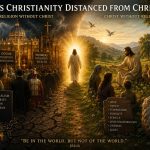
from religion to Truth,
from belief to experience,
from darkness to Light,
from death to Life,
from separation to Oneness,
and ultimately from humanity ruled by the material mind to humanity awakened in the Spirit of God.
The Second Coming, therefore, is not simply about Christ coming back to humanity.
It is also about humanity awakening to the Christ who has never left.
The Spirit has already been given. The door has already been opened. The question is whether humanity will awaken and walk through it.
As Revelation declares:
“Behold, I stand at the door and knock.”
— Revelation 3:20
Perhaps the greatest delay is not in the coming of Christ, but in the awakening of humanity to His presence.
When humanity begins to recognise God as the Life, Consciousness, and Intelligence operating within and between all living things, the meaning of the Kingdom of God begins to change from an external promise into a living reality.
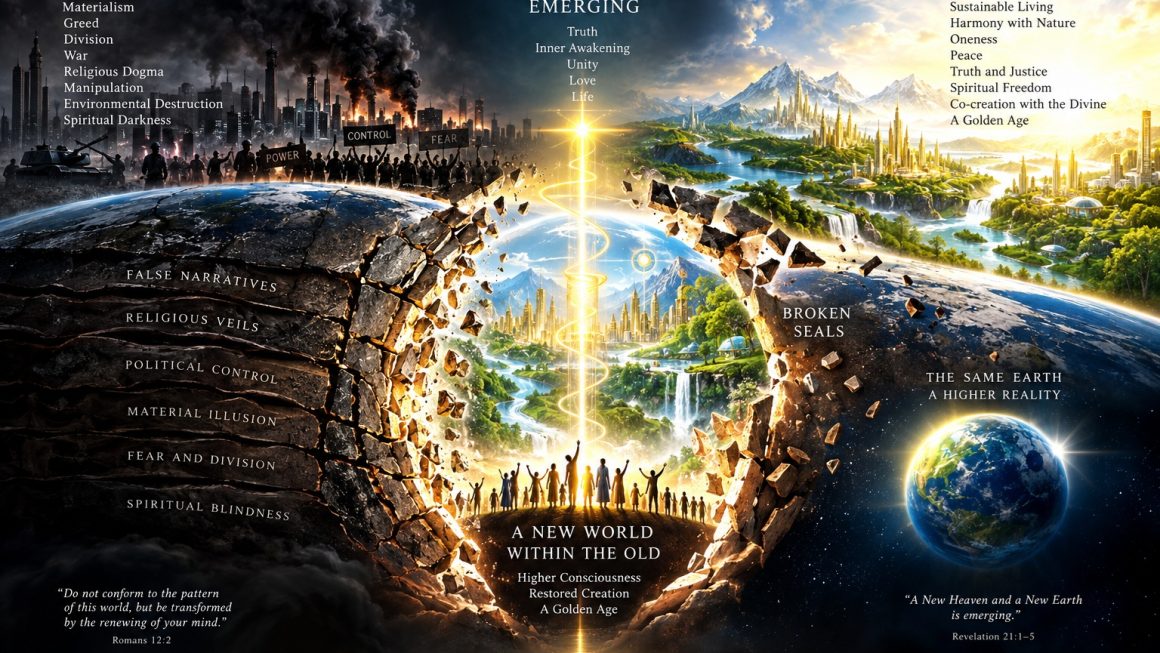
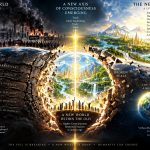
And that awakening may be the beginning of the New World within the old—the restoration towards which the entire work of Christ points.
5] Did Jesus call us to worship Him or to follow Him?
Answer:
My understanding is that Jesus primarily called humanity to follow Him, be transformed through Him, know the true God—His Father—and enter into the Kingdom of God by living according to Truth, Love, and Life.
Jesus did not merely call people to admire Him, praise Him, or establish an institution in His name. His call was deeply personal and transformative:
“Follow me.”
— Matthew 4:19
Again and again, His invitation was to leave the old way of life and walk with Him.
“If anyone would come after me, let him deny himself and take up his cross and follow me.”
— Matthew 16:24
This is very different from simply becoming a believer in a religious system. To follow Christ means to walk the path that He walked—the path of surrender, compassion, Truth, forgiveness, service, sacrifice, and obedience to the Father.
Jesus Himself said:
“I have given you an example, that you should do as I have done to you.”
— John 13:15
Therefore, the central question is not merely, “Do we worship Jesus?” but also, “Do we follow Jesus?”
A person may worship Christ with his lips while remaining unchanged in his heart. Jesus Himself warned against such outward religion:
“These people honour me with their lips, but their hearts are far from me.”
— Matthew 15:8
The transformation Jesus sought was an inward transformation.
He said:
“You must be born again.”
— John 3:7
The purpose of this transformation was to know the Father and enter into a living relationship with Him.
Jesus said:
“And this is eternal life, that they know you, the only true God, and Jesus Christ whom you have sent.”
— John 17:3
This statement is central to my understanding. Jesus came not merely to make humanity worship Him as a distant divine figure, but to reveal the Father and lead humanity back into communion with God.
He repeatedly directed attention towards the Father:
“I do nothing on my own authority, but speak just as the Father taught me.”
— John 8:28
And:
“The Father who dwells in me does his works.”
— John 14:10
Jesus therefore presents Himself as the Way to the Father:
“I am the way, and the truth, and the life. No one comes to the Father except through me.”
— John 14:6
In this understanding, Jesus is not simply the destination of religious devotion. He is the Way—the path through which humanity discovers the Father and is transformed into His likeness.
Worship and Following
There is an important distinction between worshipping Christ externally and following Christ inwardly.
Worship can become an external act—kneeling before an image, singing hymns, building magnificent churches, or repeating words of praise.
Following Christ is different.
Following Christ means allowing His Spirit to transform the way we think, speak, work, love, forgive, serve, and live.
Jesus made this distinction very strongly:
“Why do you call me ‘Lord, Lord,’ and not do what I tell you?”
— Luke 6:46
The words are profound. Calling Him “Lord” is not enough. We must do what He teaches.
Jesus also said:
“If you love me, you will keep my commandments.”
— John 14:15
Therefore, true devotion to Christ must ultimately express itself through transformation and action.
The test is not simply how loudly we worship Him, but how faithfully we walk His path.
The God Jesus Revealed
My understanding is that Jesus came to reveal the Father—the Source of Life, Consciousness, and Creation.
When Philip asked Jesus to show them the Father, Jesus replied:
“Whoever has seen me has seen the Father.”
— John 14:9
Jesus was therefore revealing the Father through His own Life.
He showed what the character of God looks like when expressed through a human being—Love, compassion, forgiveness, humility, Truth, courage, and self-sacrifice.
He did not accumulate wealth.
He did not build an empire.
He did not establish a political kingdom.
He did not use His immense power to protect Himself from Calvary.
Instead, He served.
He healed.
He forgave.
He taught.
He washed the feet of His disciples.
And finally, He surrendered His Life.
This is the Christ I understand and seek to follow.
The Question of the God of the Old Testament
Here I come to a deeper question that forms an important part of my understanding.
I see a distinction between the Father revealed by Jesus and the image of God presented through certain passages of the Old Testament. In my interpretation, some of these Old Testament portrayals can be understood as reflecting the Image of God—a powerful intermediary or governing spiritual authority—rather than the fullness of the Father whom Jesus reveals.
I understand this as the conceptual background to what I have described elsewhere as the Image of God, and I will explore this question in greater depth in the chapter on the Origin of Satan and the Demiurge.
This is a theological interpretation, not a conventional Christian doctrine, and therefore it needs to be examined carefully against the wider testimony of Scripture.
What is unmistakable, however, is that Jesus continually directs humanity towards the Father and towards a transformed way of living.
The Greatest Commandment
When Jesus was asked about the greatest commandment, He did not tell His followers to build institutions around Him.
He answered:
“Love the Lord your God with all your heart and with all your soul and with all your mind.”
— Matthew 22:37
And immediately He added:
“Love your neighbour as yourself.”
— Matthew 22:39
This is the heart of His teaching.
Love God.
Love your neighbour.
Walk in Truth.
Serve others.
Forgive.
Give.
Heal.
Protect Life.
Seek the Kingdom.
And allow yourself to be transformed.
Jesus summed up His call in remarkably simple words:
“Seek first the kingdom of God and his righteousness.”
— Matthew 6:33
The Kingdom therefore becomes the goal, while Christ becomes the Way by which we enter it.
From Worship to Transformation
My understanding, therefore, is that Jesus did not come simply to create another religion in which humanity would worship Him from a distance.
He came to transform human beings from within.
He called fishermen to become disciples.
He called sinners to repentance.
He called the sick to healing.
He called the poor to hope.
He called the powerful to humility.
He called His disciples to become servants.
And He called humanity into the Kingdom of God.
His final instruction to His disciples was not merely to worship Him, but to carry His teaching into the world:
“Go and make disciples of all nations… teaching them to obey everything I have commanded you.”
— Matthew 28:19–20
A disciple is therefore not merely someone who believes in a teacher. A disciple is someone who walks behind the teacher.
This is why I understand the call of Jesus primarily as a call to follow Him.
To follow Him is to allow His Spirit to work within us until the Life He lived begins to manifest through our own lives.
The Ultimate Test
The ultimate question, therefore, is not:
“How beautifully do we worship Jesus?”
It is:
“How faithfully do we follow Jesus?”
Do we forgive as He taught?
Do we love our enemies?
Do we serve the poor?
Do we speak Truth?
Do we reject greed?
Do we protect Life?
Do we seek Justice?
Do we surrender ego?
Do we walk in humility?
Do we seek the Kingdom of God above material wealth and power?
If the answer is yes, then worship has become Life.
The lips are no longer merely praising Christ; the Life of Christ is being manifested through the person.
Thus, in my understanding, Jesus’ call can be expressed simply:
Do not merely worship Me—follow Me.
Do not merely praise Me—be transformed through Me.
Do not merely seek Me outside yourself—discover the Father whom I reveal.
Do not merely wait for the Kingdom—live its values now.
And ultimately:
Do not remain a spectator of the Kingdom of God. Become a living expression of it.
6] Do We Have a Group Entry into the Kingdom of God?
In other words, can one enter the Kingdom of God simply by being part of a religion or a Church?
Answer — No.
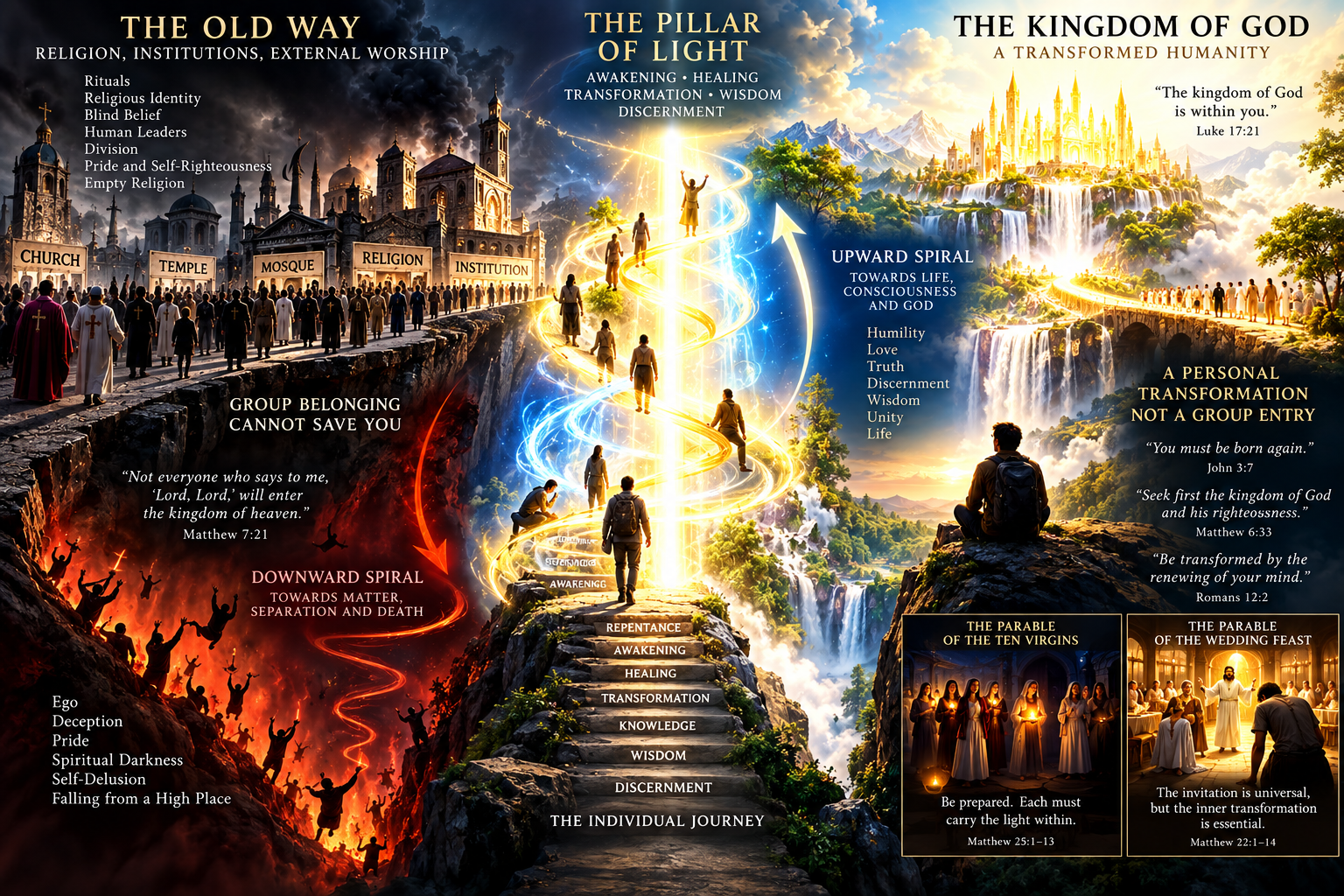
The divine plan of restoration is not based on belonging to a particular religion, denomination, Church, community, or institution. It is based on repentance, inner transformation, and the return of the individual soul towards God.
Jesus repeatedly placed the responsibility for this transformation upon the individual.
“Repent, for the kingdom of heaven is near.”
— Matthew 4:17
The call of Christ is therefore not merely a call to join an institution. It is a call to change direction, to turn away from darkness and return towards Life.
Religion can provide teaching, community, Scripture, tradition, and a place for worship. A Church can help a person begin the journey. But neither religion nor Church membership can substitute for the transformation of the individual soul.
Jesus said:
“You must be born again.”
— John 3:7
This is an intensely personal call. No one can be spiritually transformed on behalf of another person. A family cannot enter the Kingdom on behalf of its members. A Church cannot enter it on behalf of its congregation. A religious leader cannot enter it on behalf of his followers.
Each soul has to make the journey individually.
The Beginning: Entering the Pillar of Light
In my understanding, the beginning of this journey is the moment when a person enters the “Pillar of Light”—the realm of inner awakening, healing, repentance, and transformation.
This is not merely an intellectual acceptance of a doctrine. It is an experience in which the individual begins to recognize that the Kingdom of God cannot be reduced to an external institution.
Jesus said:
“The kingdom of God is within you.”
— Luke 17:21
The journey therefore begins within.
Healing and transformation are only the beginning. The call does not end when a person experiences spiritual awakening. Rather, the awakening creates a responsibility to grow towards the deeper core of the Pillar of Light, seeking knowledge, wisdom, discernment, and alignment with the Spirit of Life.
Paul expresses a similar idea when he writes:
“Be transformed by the renewing of your mind.”
— Romans 12:2
Transformation is therefore a continuing process.
The Journey Towards the Core
The deeper one travels into the Pillar of Light, the more important discernment becomes.
This is where my understanding becomes particularly important.
I see the core of the Pillar of Light as a difficult and potentially dangerous spiritual realm, because both forces can appear to operate within it: one aligned with Life, Light, and creation, and another associated with destruction, separation, and death.
Scripture itself repeatedly warns that not every spiritual influence should automatically be accepted as coming from God.
“Test the spirits to see whether they are from God.”
— 1 John 4:1
This means that spiritual experience alone is not sufficient. A person must learn to discern which spirit is being followed and where it is leading.
Is it leading towards Life or towards death?
Is it producing humility or superiority?
Is it producing love or division?
Is it producing freedom or bondage?
Is it producing truth or deception?
Is it drawing the person closer to God and to humanity, or separating the person from both?
Jesus gave the principle:
“You will know them by their fruits.”
— Matthew 7:16
The fruit becomes the test.
The Two Directions Within the Pillar of Light
One of the important revelations in my understanding is that light does not simply move in a straight line; it can be conceived as moving in a spiral.
Within this conceptual picture, there are two fields or directions of movement.
One movement is upward towards Life, Light, consciousness, and God.
The other movement is downward towards matter, separation, decay, and death.
Thus, the Pillar of Light contains two opposing movements:
One moves upward towards Life.
The other moves downward towards matter and death.
This is not being presented here as an established scientific description of physical light, but as a spiritual model through which I understand the inner journey of the soul.
The same reality can therefore become a place of ascent or descent depending upon the direction in which consciousness moves.
A person may enter the Pillar of Light through genuine awakening and yet, through pride, deception, attachment, or lack of discernment, begin to move in the opposite direction.
That is why spiritual awakening by itself is not the destination.
The direction of the journey matters.
The Danger of Falling from a High Place
This is where the warning becomes especially serious.
A person may reach what appears to be a high spiritual position and still fall.
The higher the position, the greater the danger if discernment is lost.
The Scriptures contain repeated warnings about this possibility. Jesus Himself warned that not everyone who calls upon Him or performs outwardly religious acts necessarily understands the will of God.
“Not everyone who says to me, ‘Lord, Lord,’ will enter the kingdom of heaven.”
— Matthew 7:21
This is a profound warning against assuming that religious activity automatically equals spiritual transformation.
One may preach.
One may teach.
One may perform religious works.
One may belong to a Church.
One may even experience powerful spiritual manifestations.
Yet the essential question remains:
In which direction is the soul moving?
Towards Life—or towards death?
Towards Light—or towards darkness?
Towards Love—or towards separation?
Towards Truth—or towards self-deception?
The Parable of the Ten Virgins
The Parable of the Ten Virgins in Matthew 25:1–13 illustrates this principle powerfully.
All ten were waiting for the bridegroom.
All ten were part of the same group.
All ten carried lamps.
Yet only five were prepared with sufficient oil.
The distinction was therefore not simply group membership. It was inner preparedness.
When the bridegroom came, the five wise virgins were ready, while the five foolish virgins discovered that their preparation could not be borrowed from others.
This contains an important spiritual principle:
No one can borrow another person’s inner transformation.
The faith of another cannot substitute for one’s own awakening.
The spiritual maturity of a priest cannot substitute for the spiritual maturity of a believer.
The holiness of a parent cannot substitute for the transformation of a child.
The Church cannot carry a soul into the Kingdom.
Each person must carry the light within.
The Parable of the Wedding Feast
The Parable of the Wedding Feast in Matthew 22:1–14 presents another dimension of the same mystery.
Many are invited, but the story introduces the striking image of the person who enters the wedding feast without the appropriate wedding garment.
The invitation alone was not enough.
Being present at the feast was not enough.
The external entry did not necessarily correspond to the inner condition required for the feast.
In my understanding, this points again towards an inverse balance: the closer one comes to the spiritual realm, the greater the responsibility to become aligned with the nature of that realm.
The invitation is universal.
The response is personal.
The transformation is individual.
Religion Can Point Towards the Kingdom—but Cannot Replace the Journey
This does not mean that religion or Church has no value.
Religion can preserve wisdom.
Scripture can reveal truth.
A Church can provide fellowship.
A spiritual community can encourage a person.
A teacher can point towards the path.
But the finger pointing towards the Moon is not the Moon.
The institution is not the Kingdom.
The doctrine is not the Kingdom.
The building is not the Kingdom.
The religious identity is not the Kingdom.
The Kingdom must ultimately become a living reality within the transformed human being.
Jesus did not merely say, “Join a group.”
He said:
“Follow me.”
— Matthew 4:19
And following requires movement.
It requires leaving something behind.
It requires transformation.
It requires discernment.
It requires perseverance.
The Kingdom Is a Journey of Conscious Transformation
The Kingdom of God, therefore, cannot be understood merely as a destination to which a group of religious people collectively travels.
It is also a state of being into which the individual is transformed.
This transformation begins with repentance.
It develops through healing.
It grows through knowledge.
It deepens through wisdom.
It requires discernment.
And ultimately, it requires alignment with Life and Light.
The journey may begin collectively—with a Church, a community, a family, or a spiritual teacher—but the decisive transformation must occur within the individual.
Jesus said:
“The kingdom of God is within you.”
— Luke 17:21
This makes the question deeply personal.
Not:
“Which religion do I belong to?”
But:
“What am I becoming?”
Not:
“Which Church will take me to the Kingdom?”
But:
“Is my life moving towards Life?”
Not:
“Who is my spiritual leader?”
But:
“Which spirit am I following?”
And ultimately:
“Am I becoming aligned with the Light?”
The Great Responsibility of the Individual Soul
The Kingdom of God may therefore be understood as a universal invitation, but the response cannot be collective in the sense of being accomplished on our behalf by an institution.
We may walk together.
We may pray together.
We may learn together.
We may worship together.
We may encourage one another.
But the final movement of the soul towards God is personal.
The Pillar of Light is therefore both an invitation and a test.
It is an invitation to rise towards Life.
It is a test of whether we can discern the spirit that leads us.
The deeper we travel, the greater the need for humility, wisdom, love, and discernment.
For if we fail to discern the direction of the spirit, we may believe that we are ascending while actually moving downward.
This, in my understanding, is the deeper meaning behind the warnings contained in the Parable of the Ten Virgins, the Parable of the Wedding Feast, and other teachings of Jesus.
The Kingdom cannot be entered merely by belonging to a group.
The Kingdom must be awakened within the individual.
And the ultimate question is not whether we have entered a religion, a Church, or a spiritual community.
The ultimate question is: Have we entered the Light—and are we continuing to move towards its Core, towards Life, Truth, Love, and God
7] What Is the Sword of the Spirit, and Why Does Jesus Speak of Separation?
Jesus taught love, forgiveness, compassion, and reconciliation. He called us to love our parents, our brothers and sisters, our neighbours, and even those who oppose us. He taught His disciples to pray, to receive the Spirit, and to go out into the world to heal, serve, and transform lives in His name.
Yet Jesus also spoke about something that appears, at first, to be very different: the sword, separation, and judgment.
Paul describes the spiritual armour of God as including the belt of truth, the breastplate of righteousness, the shield of faith, the helmet of salvation, and the sword of the Spirit, which is the Word of God (Ephesians 6:14–17).
What, then, is the sword of the Spirit?
How can the same Jesus who taught love and forgiveness also say that if someone refuses to listen, the disciples should shake the dust from their feet and move on (Matthew 10:14)?
And how do we understand His remarkable statement:
“I did not come to bring peace, but a sword.”
— Matthew 10:34
He then speaks of division between father and son, mother and daughter, and members of one’s own household (Matthew 10:35–36).
Is Jesus, therefore, presenting Himself as both a unifying principle and a dividing principle?
What does this apparent contradiction mean?
The Sword Is Not a Sword of Violence
The first point is essential: Jesus’ reference to the sword should not be understood as a command to use physical violence against others.
The “sword” belongs to the realm of Spirit, Truth, discernment, and judgement.
Paul explicitly calls it “the sword of the Spirit” and identifies it with the Word of God (Ephesians 6:17).
The sword therefore represents something that cuts through.
It cuts through deception.
It cuts through falsehood.
It cuts through ego.
It cuts through hypocrisy.
It cuts through attachment.
It cuts through darkness.
And ultimately, it separates what belongs to Life and Light from what leads towards death and darkness.
The sword does not necessarily destroy the person.
It separates the person from the darkness within and around the person.
This is why the sword is closely connected with Truth.
Truth has a dividing power.
When Truth enters consciousness, it forces us to make a choice.
The First Call Is Transformation
In my understanding, the first call of Jesus is not to judge another person.
It is to receive His Spirit and experience transformation within ourselves.
The journey begins with repentance.
It continues through surrender.
It reaches into the deepest levels of the ego.
And eventually, it calls us to die to the old self so that a new life can emerge.
Jesus expressed this principle when He said:
“Whoever wants to follow me must deny themselves and take up their cross.”
— Matthew 16:24
This is the meaning of what I understand as dying to the ego.
The ego seeks to preserve itself.
The Spirit calls us beyond the ego.
The ego seeks control.
The Spirit calls us towards surrender.
The ego seeks superiority.
The Spirit calls us towards humility.
The ego seeks separation.
The Spirit calls us towards Love and Life.
Thus, the first person upon whom the sword must fall is ourselves.
Before we attempt to separate Light from darkness in the world, we must allow the Spirit to reveal the darkness within ourselves.
Calvary and the Liberation of the Soul
In my understanding, Calvary represents a decisive turning point in this process.
Through the death and Resurrection of Christ, humanity is presented with a new possibility of freedom and transformation. I understand this spiritually as the liberation of souls from the dominion of darkness and their opening into the consciousness and Life revealed through Christ.
This does not mean that every human being is automatically transformed.
Rather, the victory of Christ opens the way for every soul to choose.
The door is open.
The Spirit is given.
The call has gone out.
But the individual must respond.
Therefore, since Calvary, the decisive question is no longer simply whether humanity has access to the Light.
The question becomes:
Will the individual turn towards the Light—or continue towards darkness?
Freedom and the Choice Between Two Directions
This connects directly with the Pillar of Light described in the previous chapter.
In my understanding, the spiritual realm presents two fundamental directions:
Life or death.
Light or darkness.
Truth or deception.
Love or separation.
Spirit or ego.
The soul is given the freedom to align itself.
This freedom is essential to the divine plan of restoration.
God does not restore humanity merely by overpowering human choice. Restoration requires the awakening and willing participation of the individual soul.
The Spirit calls.
Truth reveals.
Love invites.
But the individual must choose.
This is why Jesus repeatedly called people to follow Him.
He did not force them.
He invited them.
Why Does Jesus Tell the Disciples to Shake the Dust from Their Feet?
Jesus instructed His disciples that when a person or community refused to receive their message, they should shake the dust from their feet and move on (Matthew 10:14; Mark 6:11).
This is another expression of the sword.
The disciple is not instructed to retaliate.
He is not instructed to force belief.
He is not instructed to destroy the person who rejects the message.
He is instructed to separate himself from the rejection and continue the journey.
This is a profound principle.
Love does not mean remaining permanently attached to darkness.
Forgiveness does not mean surrendering discernment.
Compassion does not mean participating in destructive behaviour.
Peace does not mean abandoning Truth.
There comes a point when the disciple must say:
I will love you, but I will not follow you into darkness.
I will forgive you, but I will not participate in what destroys Life.
I will pray for you, but I will continue walking towards the Light.
That is the sword of separation.
Why Does Jesus Say That He Came to Bring a Sword?
Jesus’ statement that He came not to bring peace but a sword becomes clearer when understood in this context.
Christ Himself becomes a dividing principle because Truth demands a response.
When Light enters darkness, the two cannot remain indistinguishable.
When Truth confronts falsehood, a distinction emerges.
When Love confronts hatred, a choice becomes necessary.
When the Spirit confronts ego, the old and the new cannot remain permanently united.
Therefore, Christ does not necessarily divide people because He desires division.
Rather, His presence reveals the divisions that already exist within human consciousness and society.
A family may be divided because one member chooses Truth while another chooses power.
A husband and wife may become divided because one chooses a path of transformation while the other refuses it.
Parents and children may become divided because they no longer share the same values.
The dividing line is therefore not necessarily between people themselves.
It is between what they choose to follow.
The Sword Between Father and Mother, Husband and Wife, and Children
Jesus’ words about division within families are particularly powerful because the family is normally the strongest human bond.
Yet even the strongest earthly relationship cannot become greater than Truth.
If loyalty to family demands that a person abandon Truth, the disciple must choose Truth.
If loyalty to society demands participation in injustice, the disciple must choose righteousness.
If religious tradition demands that a person reject the living Spirit, the disciple must choose the Spirit.
If the ego demands preservation of status, power, or identity, the disciple must allow the sword of Truth to cut through it.
This is why Jesus said:
“Whoever loves father or mother more than me is not worthy of me.”
— Matthew 10:37
This should not be understood as a rejection of parents or family. Rather, it establishes a hierarchy of allegiance: Truth and God must ultimately stand above every earthly attachment.
The Sword and Judgment
This leads us to the deeper question of judgment.
Judgment is a critical part of the divine plan of restoration.
But judgment should not first be understood as condemnation.
At its deepest level, judgment is discernment and separation.
The Greek concept of judgment carries the idea of distinguishing or deciding. In this sense, judgment means recognizing what something truly is and separating one thing from another.
The sword performs this function.
It distinguishes:
Light from darkness.
Truth from falsehood.
Life from death.
Love from hatred.
Spirit from ego.
Righteousness from corruption.
The final judgment can therefore be understood as the ultimate revelation of what each soul has chosen to align with.
Jesus repeatedly presented humanity with this choice.
“The light has come into the world.”
— John 3:19
The question is not simply whether Light exists.
The question is whether we come into the Light.
Judgment Begins Within
The most important judgment is therefore not the judgment we pronounce upon others.
It is the judgment that occurs within ourselves.
The sword of the Spirit enters consciousness and asks:
What am I holding on to?
What must I surrender?
What in me belongs to the old order?
What belongs to the new?
What is Life-giving?
What is destructive?
What is motivated by Love?
What is motivated by ego?
What is Truth?
What is deception?
This inner judgment is part of transformation.
The writer of Hebrews speaks of the Word of God as living and active, penetrating deeply and discerning the thoughts and intentions of the heart (Hebrews 4:12).
The sword therefore reaches deeper than external behaviour.
It reaches the intention behind the behaviour.
Love and Separation Are Not Opposites
At first sight, Love and separation appear to contradict one another.
But they can coexist.
True Love does not embrace destruction simply because it is called compassion.
True forgiveness does not require us to remain attached to destructive patterns.
True peace does not require us to compromise Truth.
And true unity cannot mean mixing Light and darkness without distinction.
There is therefore a difference between loving a person and agreeing with everything that person does.
We can love the person while rejecting the darkness.
We can forgive the person while separating ourselves from destructive behaviour.
We can pray for the person while refusing to follow the path that person has chosen.
This is the spiritual meaning of the sword.
The Sword as the Instrument of Restoration
The apparent paradox is therefore resolved.
Jesus is the unifying principle because He calls humanity into Love, Truth, Life, and reconciliation with God.
At the same time, He is the dividing principle because Truth necessarily separates what is aligned with Life from what is opposed to Life.
The sword is therefore not contrary to Love.
The sword serves Love by separating Love from what destroys Life.
The purpose of judgment is ultimately restoration.
The purpose of discernment is to find the right direction.
The purpose of separation is to free the soul from darkness.
The purpose of repentance is transformation.
And the purpose of transformation is return to God.
The Journey Through the Sword
This brings us back to the central journey described throughout these questions.
First comes the call.
Then comes repentance.
Then surrender.
Then healing.
Then transformation.
Then comes discernment.
And finally, the soul must make a conscious alignment with Life and Light.
The sword of the Spirit accompanies this entire journey.
It cuts away the old.
It exposes deception.
It separates the soul from destructive attachments.
It protects the path of Life.
And it opens the way towards the Kingdom of God.
Thus, when Jesus speaks of the sword, He is not abandoning His teaching of Love and forgiveness.
Rather, He is revealing the other side of Love:
Love must have Truth.
Truth requires discernment.
Discernment requires judgment.
Judgment creates separation.
And separation allows the soul to choose its direction.
The sword of the Spirit is therefore the principle of divine discernment—the power that separates the soul from darkness and calls it into alignment with Light, Life, Truth, and Love.
And perhaps this is the deeper meaning of the paradox:
Christ unites what belongs to Life,
but separates Life from what destroys it.
The final question is therefore not simply:
“Whom do I love?”
It is:
“What am I aligned with?”
“What spirit am I following?”
“Am I walking towards Life—or away from it?”
For in the end, judgment is not merely something that happens to the soul.
Judgment reveals what the soul has chosen to become.